Best Feature Request Tools for iOS Apps in 2026
Compare the top feature request tools for iOS developers. FeaturePulse, WishKit, Canny, Featurebase and more. Native SDK, MRR tracking, and pricing compared.

Are you an iOS developer drowning in scattered feedback? Feature requests hiding in App Store reviews, emails, support tickets, and Twitter DMs? You need a proper feature request tool — but which one?
In this comprehensive guide, we'll cover the best feature request tools for iOS developers in 2026, with a focus on tools that offer native mobile support, MRR tracking, and the features that actually matter for app developers.
Table of contents
TL;DR - Best Feature Request Tools for iOS in 2026:
- FeaturePulse — Best overall for iOS developers. Native SwiftUI SDK, MRR tracking, App Store review import.
- WishKit — Good iOS-focused alternative, but fewer features than FeaturePulse.
- Canny — Popular but expensive ($79/mo), no native iOS SDK.
- Featurebase — Modern UI, web-only, starts at $49/mo.
- UserJot — AI duplicate detection, web-only, no MRR tracking.
- FeedBear — Basic tool, no free tier, web-only.
- Uservoice — Enterprise-grade ($16k/year), overkill for indie devs.
- Trello — Don't use this for feature requests (here's why).
Why Do You Need a Feature Request Tool?
As your app grows, keeping track of what users want becomes impossible. Feature requests come from everywhere:
- App Store reviews (often buried in 3-star ratings)
- Support emails
- Twitter/X mentions
- In-app feedback
- Beta tester feedback in TestFlight
Without a centralized system, you're making product decisions based on gut feeling instead of data. Worse, your users feel ignored when their requests disappear into a void.
A good feature request tool helps you:
- Collect feedback in one place
- Prioritize based on data (votes, revenue, engagement)
- Communicate progress back to users
- Reduce churn by building what paying customers actually want
What to Look for in a Feature Request Tool (iOS Edition)
Not all feature request tools are built for mobile developers. Here's what matters:
1. Native Mobile SDK
Most feedback tools are web-first. They expect you to embed a web widget or link out to an external portal. This breaks the native iOS experience and creates friction.
Look for tools with native SDKs (SwiftUI preferred) that feel like part of your app.
2. MRR Tracking
A vote from a $99/month subscriber matters more than a vote from a free user. The best tools let you track revenue behind each request so you can prioritize for business impact.
3. App Store Review Import
Feature requests often hide in App Store reviews. Tools that can import and analyze reviews save hours of manual work.
4. Apple Privacy Compliance
Since 2024, Apple requires Privacy Manifests for SDKs. Make sure any tool you integrate is compliant, or risk App Store rejection.
5. Engagement Tracking
Not all users are equal. Power users (20+ sessions/month) give more valuable feedback than someone who opened your app once. Tools that track engagement help you prioritize accordingly.
6. Reasonable Pricing
Enterprise tools charging $79-399/month don't make sense for indie developers and small teams. Look for tools with free tiers and affordable premium plans.
Best Feature Request Tools for iOS Developers
1. FeaturePulse
Best Overall for iOS Developers
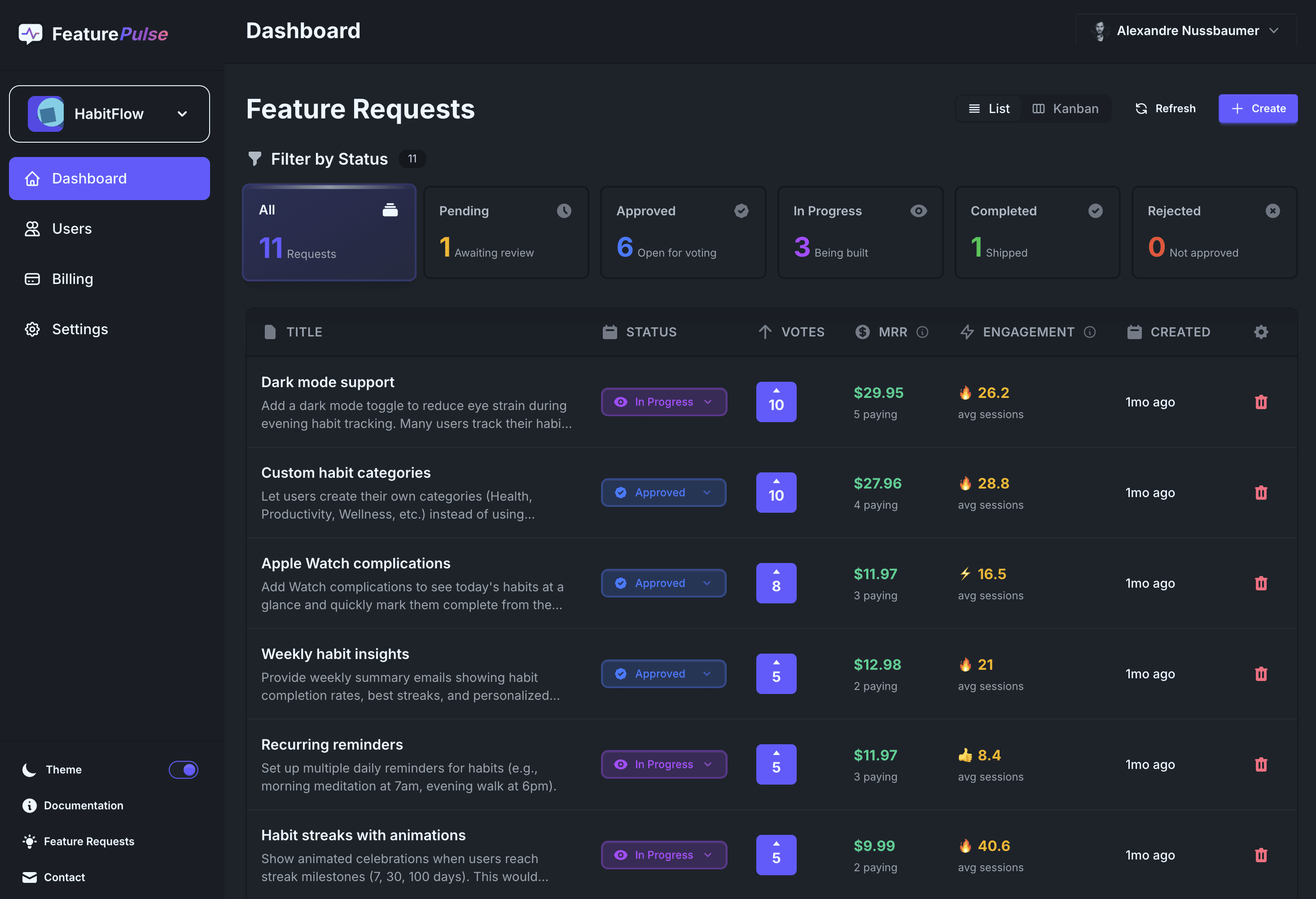
FeaturePulse is the only feature request tool built specifically for iOS developers. It offers a native SwiftUI SDK that integrates seamlessly into your app — no web widgets, no WebViews.
Key Features:
- Native SwiftUI SDK — Looks and feels like part of your app
- MRR Tracking — See revenue behind each feature request with automatic currency conversion
- App Store Review Import — AI-powered extraction of feature requests from reviews
- Engagement Tracking — Identify power users vs ghost users
- Built-in Translations — 6 languages included
- Apple Privacy Manifest — Fully compliant
Pricing:
- Free — Up to 5 feature requests, unlimited votes
- Premium ($9/mo) — Unlimited requests, MRR tracking, Slack integration
- Enterprise ($19/mo) — GitHub sync, CSV export, priority support
Best For: iOS developers who want native integration, MRR-based prioritization, and don't want to pay enterprise prices.
Compare FeaturePulse to alternatives →
2. WishKit
iOS-Focused Alternative
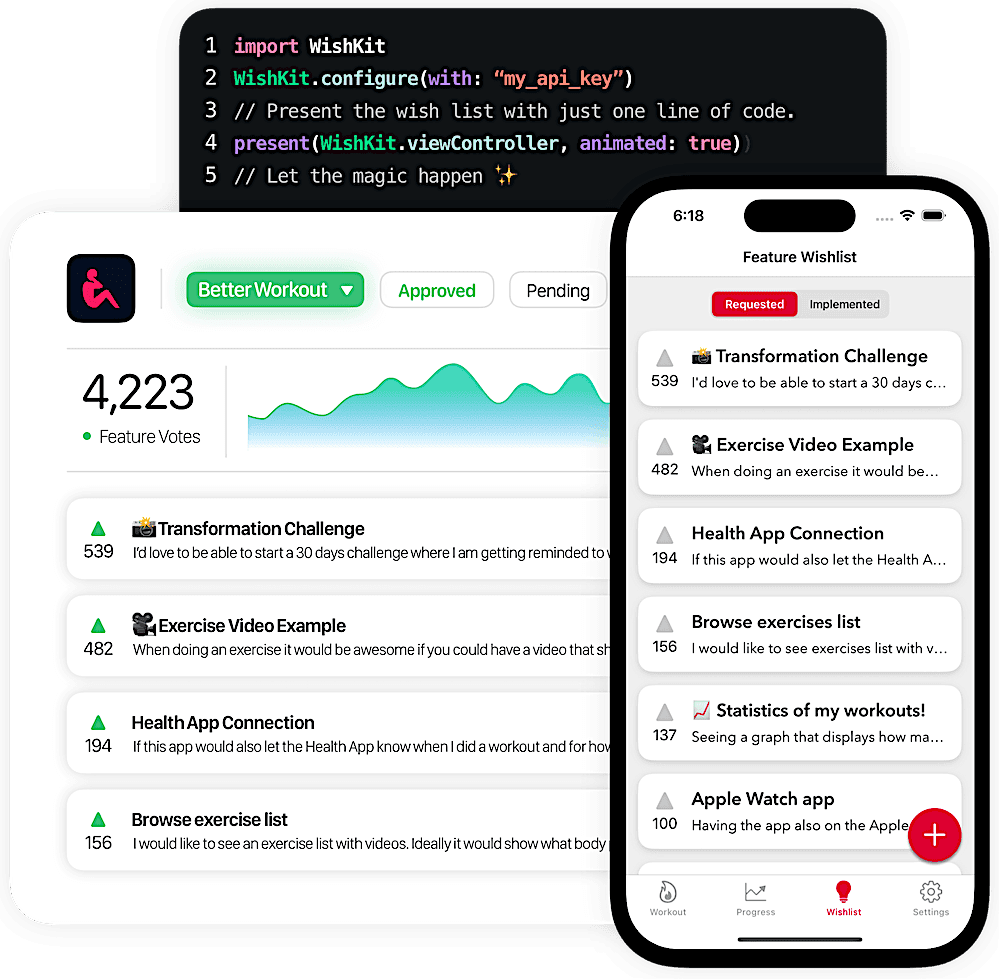
WishKit is another iOS-focused tool with a native SDK. It's a solid option, but lacks some advanced features that FeaturePulse offers.
Key Features:
- Native iOS SDK
- Basic MRR tracking
- Feature voting
- Free tier available
What's Missing:
- No automatic currency conversion
- No engagement tracking
- No GitHub integration
- No App Store review import
- No Slack notifications
Pricing: From $15/month
Best For: iOS developers who want a simple, no-frills solution.
FeaturePulse vs WishKit comparison →
3. Canny
Popular but Expensive
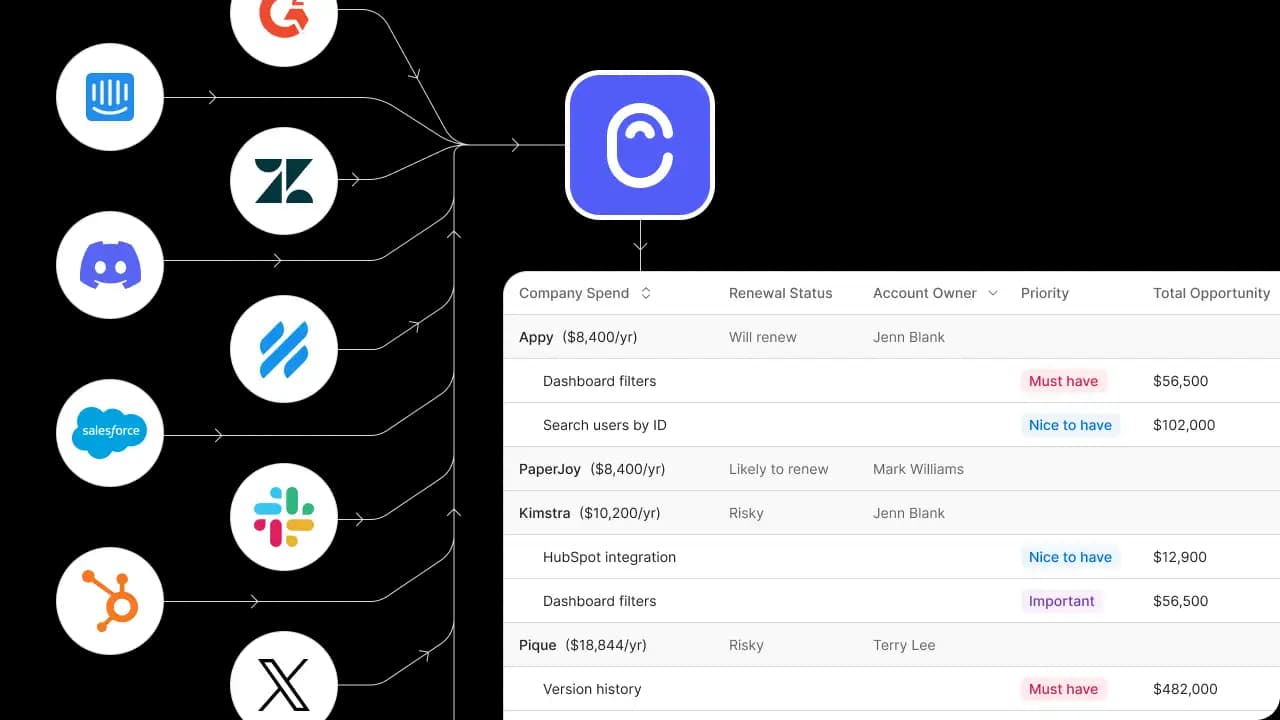
Canny is one of the most well-known feature request tools, used by many SaaS companies. However, it's designed for web apps and lacks a native iOS SDK.
Key Features:
- Feedback boards and roadmaps
- Changelog
- Many integrations (Jira, Slack, etc.)
- User segmentation (on higher plans)
What's Missing:
- No native iOS SDK (web widgets only)
- No App Store review import
- Very expensive pricing
- Free plan limited to 100 active posts
Pricing: From $79/month (Starter), $399/month (Growth)
Best For: Enterprise web SaaS companies with budget for expensive tools.
FeaturePulse vs Canny comparison →
4. Featurebase
Modern UI, Web-Only
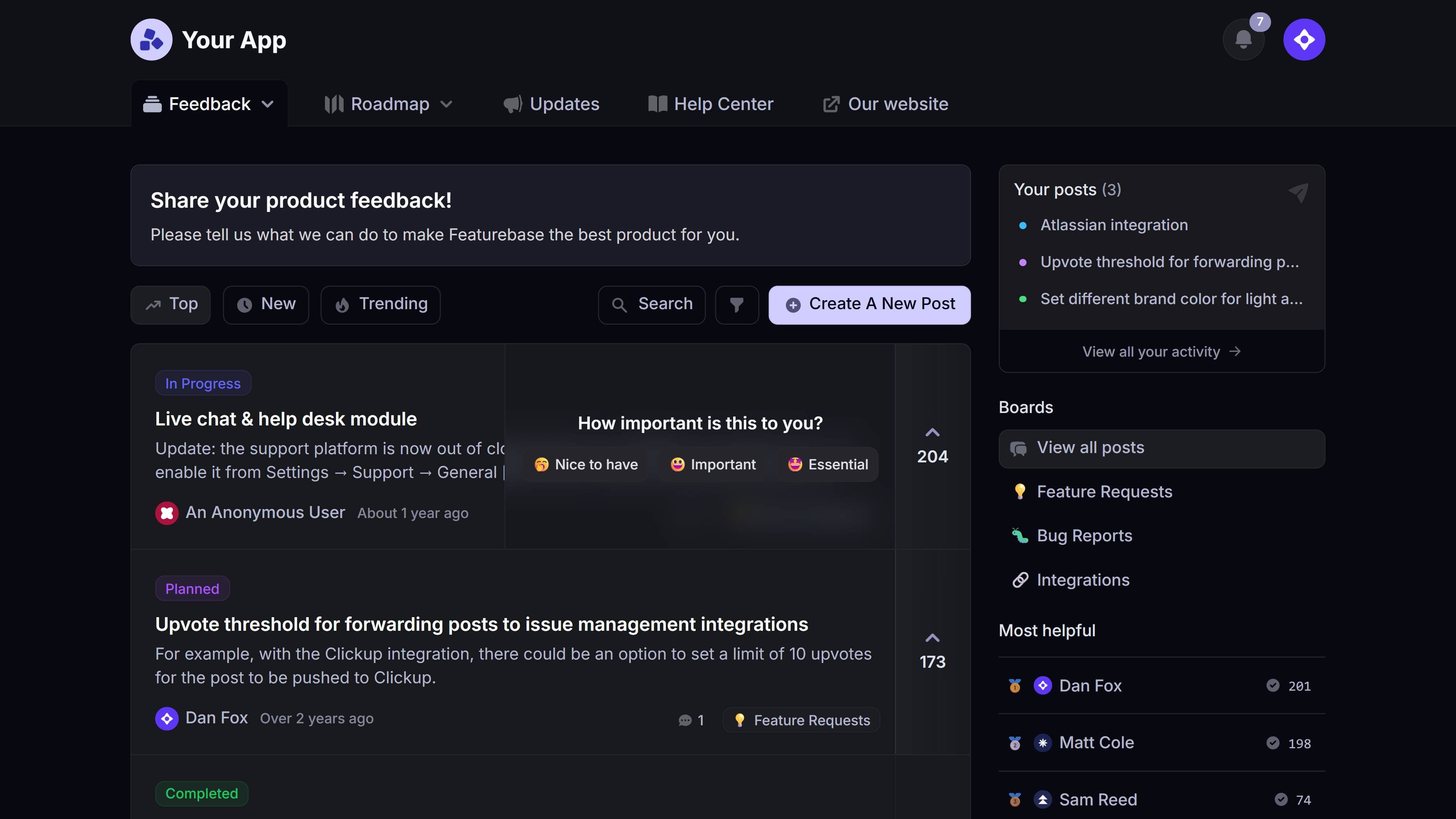
Featurebase is a modern feedback tool with a clean interface. It offers feedback boards, roadmaps, changelogs, and even a help center. However, it's entirely web-based.
Key Features:
- Clean, modern UI
- Feedback boards and roadmaps
- Changelog with popups
- Help center / knowledge base
- Good integrations
What's Missing:
- No native iOS SDK
- No App Store review import
- No engagement tracking
- Manual MRR tracking only
Pricing: From $49/month
Best For: Web SaaS companies who want an all-in-one feedback platform.
FeaturePulse vs Featurebase comparison →
5. UserJot
AI-Powered, Web-Only
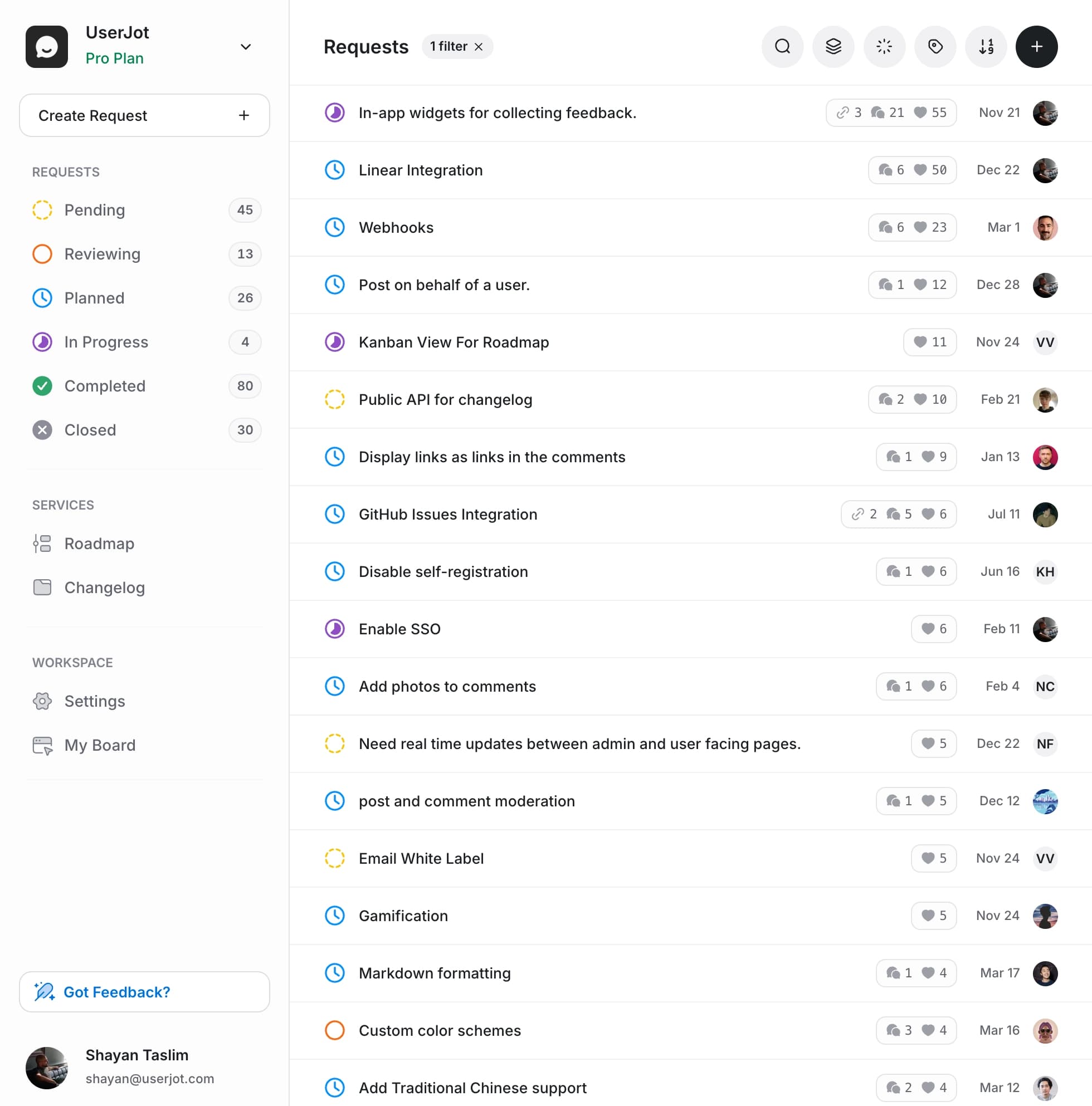
UserJot is a complete feedback platform for SaaS teams with AI-powered features like duplicate detection. However, it's web-only and lacks mobile SDK support.
Key Features:
- AI duplicate detection
- Changelog with email notifications
- Feedback boards and roadmaps
- Free tier available
What's Missing:
- No native iOS SDK
- No MRR tracking
- No engagement tracking
- No App Store review import
- No built-in translations
Pricing: Free / $29/month
Best For: Web SaaS teams who want AI-powered duplicate detection.
FeaturePulse vs UserJot comparison →
6. FeedBear
Basic and Affordable
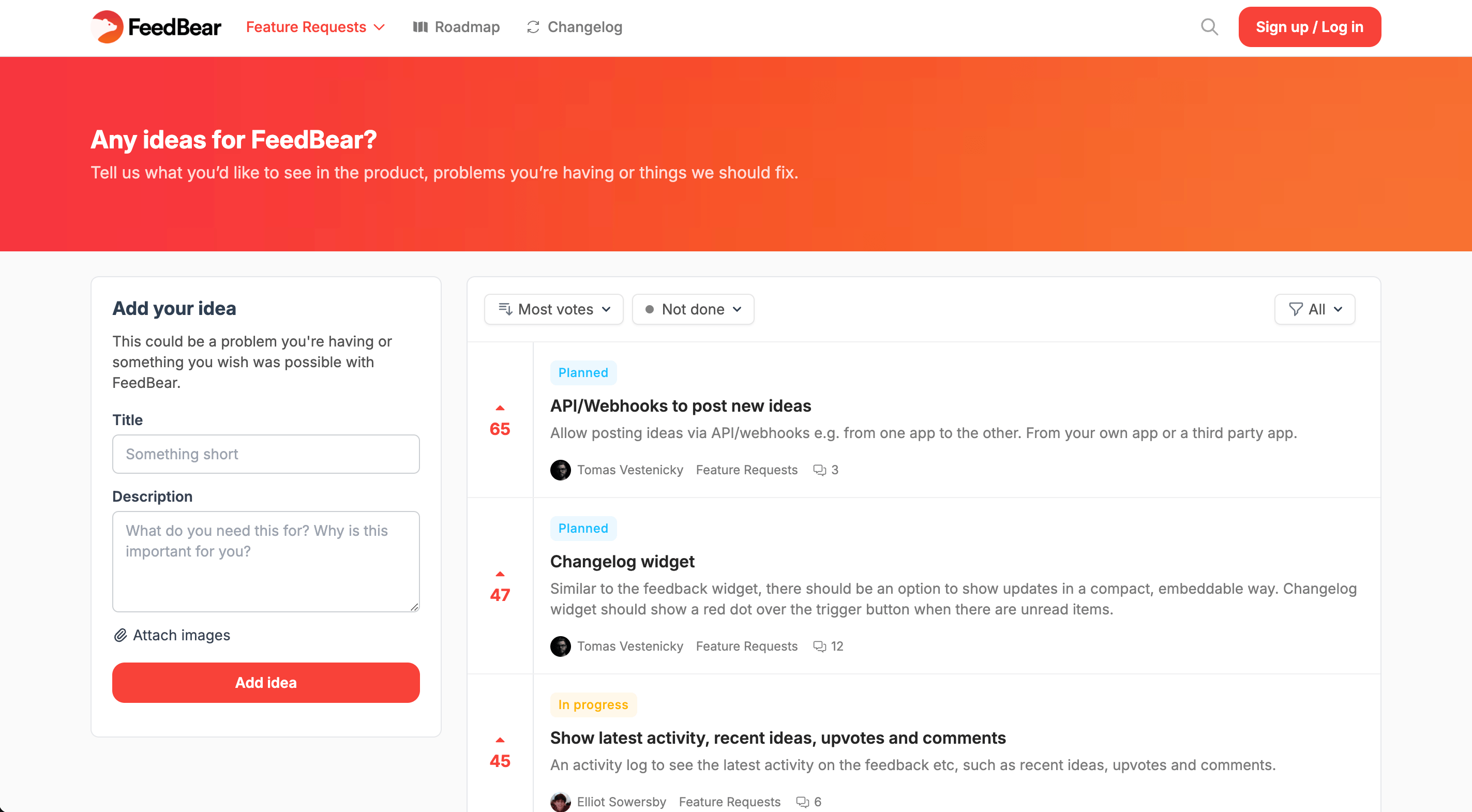
FeedBear is a straightforward feedback tool with boards, roadmaps, and a changelog. It's relatively affordable but lacks advanced features.
Key Features:
- Feedback boards
- Public roadmap
- Changelog
- Slack integration
What's Missing:
- No native iOS SDK
- No MRR tracking
- No engagement tracking
- No free tier (14-day trial only)
- No App Store review import
Pricing: From $49/month
Best For: Small teams who need basic feedback collection without advanced features.
FeaturePulse vs FeedBear comparison →
7. Uservoice
Enterprise-Grade, Enterprise Pricing
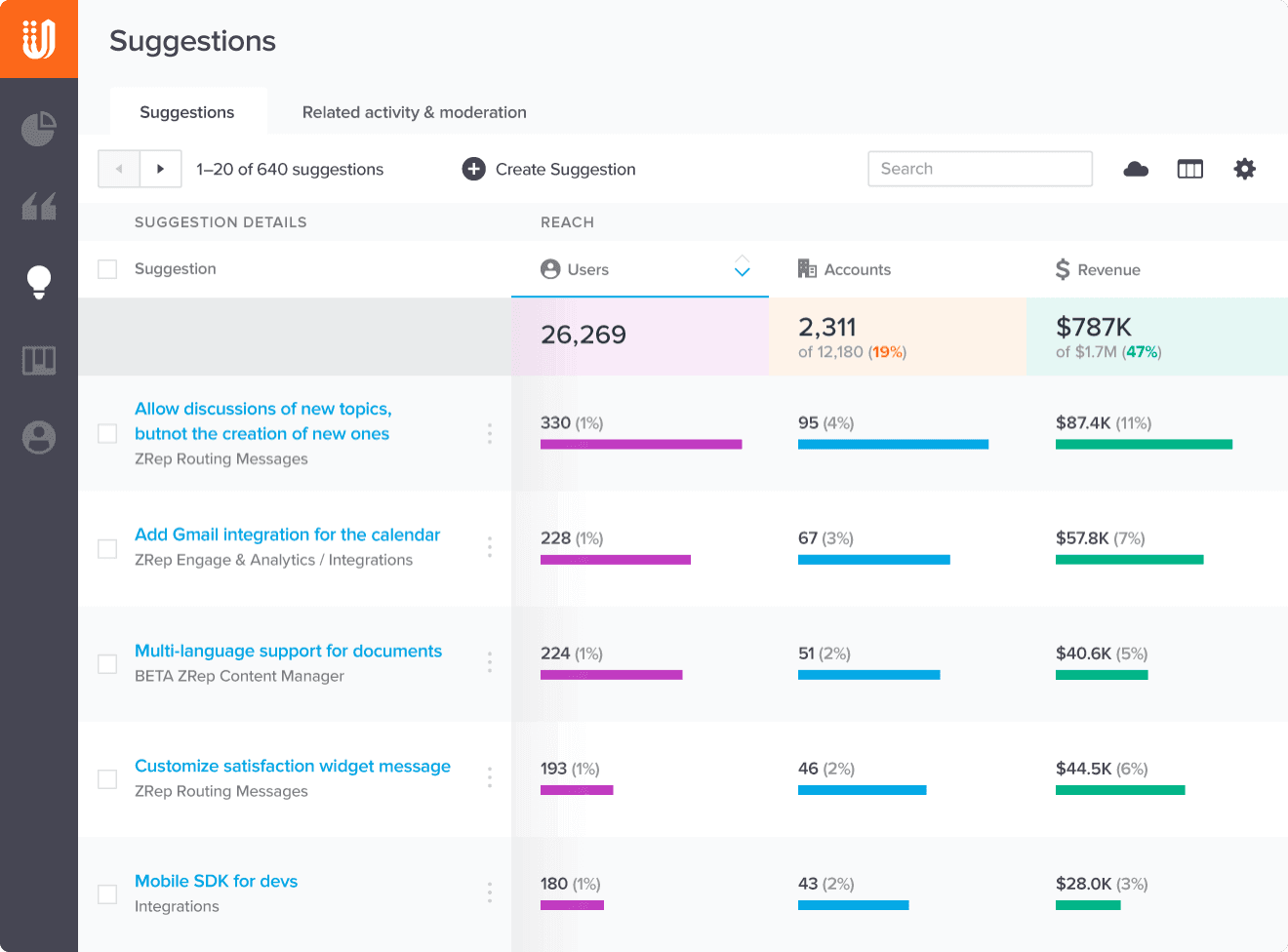
Uservoice is a well-established customer intelligence platform used by major enterprises like Amazon Alexa, Cisco, Adobe Creative Cloud, and Electronic Arts. It's designed for large organizations with complex feedback needs — and priced accordingly.
Key Features:
- Customer intelligence and feedback portal
- Advanced customer segmentation
- Quantitative feedback analysis
- Extensive integrations (Salesforce, Zendesk, Jira, etc.)
- SOC 2 Type 2, GDPR, and WCAG compliant
- Dedicated customer success manager
What's Missing:
- No native iOS SDK (web portal only)
- No App Store review import
- No MRR tracking for mobile apps
- No free tier
- Massive price tag ($16,000/year minimum)
- 4-6 week onboarding process
Pricing: Starting at $16,000/year
Best For: Large enterprises with dedicated product teams and budgets. Overkill for indie developers, small teams, or mobile-focused apps.
FeaturePulse vs Uservoice comparison →
8. Trello (Why You Shouldn't Use It)
Not Built for Feature Requests
Many indie developers start by using Trello for feature requests because it's free and familiar. This is a mistake.
Problems with Trello for Feature Requests:
- Requires account creation — Users need a Trello account to submit feedback, creating massive friction
- No voting system — You have to use workarounds like emoji reactions
- No status notifications — Users never know when you ship their request
- Not designed for feedback — It's a project management tool, not a feedback tool
- Unprofessional appearance — Sends users to a completely different app
Better Alternative: Use a purpose-built tool like FeaturePulse that removes friction, has built-in voting, and automatically notifies users when features ship.
FeaturePulse vs Trello comparison →
Feature Comparison Table
| Feature | FeaturePulse | WishKit | Canny | Featurebase | UserJot | FeedBear | Uservoice |
|---|---|---|---|---|---|---|---|
| Native iOS SDK | Yes (SwiftUI) | Yes | No | No | No | No | No |
| MRR Tracking | Auto | Yes | Manual | Manual | No | No | Manual |
| Currency Conversion | 20+ currencies | No | No | No | No | No | No |
| Engagement Tracking | Yes | No | No | No | No | No | Yes |
| App Store Import | AI-powered | No | No | No | No | No | No |
| Free Tier | Yes | Yes | Limited | Yes | Yes | Trial only | Trial only |
| Starting Price | $9/mo | $15/mo | $79/mo | $49/mo | $29/mo | $49/mo | $1,333/mo |
| Privacy Manifest | Yes | Unknown | No | No | No | No | No |
How to Choose the Right Tool
Choose FeaturePulse if:
- You're building iOS apps and want native integration
- You want to prioritize features by revenue (MRR tracking)
- You need App Store review import
- You're budget-conscious (starts at $9/mo)
- Privacy compliance matters to you
Choose WishKit if:
- You want a simple iOS-focused tool
- You don't need advanced features like engagement tracking
- You're okay with fewer integrations
Choose Canny or Featurebase if:
- You're building a web SaaS (not mobile)
- You have enterprise budget ($79-399/mo)
- Native mobile experience doesn't matter
Choose Uservoice if:
- You're a large enterprise with a dedicated product team
- You have significant budget ($16k+/year)
- You need enterprise compliance (SOC 2, GDPR)
- You're building web products, not mobile apps
Avoid Trello for feature requests:
- It creates friction for users
- No proper voting or notification system
- Looks unprofessional
Conclusion
For iOS developers, the choice is clear: FeaturePulse offers the only native SwiftUI SDK combined with MRR tracking, engagement analytics, and App Store review import — all at a fraction of the cost of enterprise alternatives.
Stop guessing what features to build. Start collecting feedback that's weighted by revenue and engagement, so you can build what your paying customers actually want.
Ready to collect better feedback?
Join iOS developers using FeaturePulse to prioritize features by revenue and build what paying customers want.
FAQ
Frequently Asked Questions
- A feature request tool helps you collect, organize, and prioritize suggestions from your users. Instead of tracking requests in spreadsheets or Trello boards, you have a dedicated system with voting, status updates, and analytics.
- If you have more than a handful of users, yes. Without a centralized system, you'll miss feedback, make decisions based on gut feeling, and frustrate users who feel ignored. Tools like FeaturePulse cost less than a cup of coffee per week but can significantly impact your product decisions.
- FeaturePulse offers a free tier with up to 5 feature requests and unlimited votes — enough for early-stage apps. Unlike Canny's free plan (limited to 100 posts), FeaturePulse's free tier doesn't expire.
- A feature requested by 10 users paying $50/month ($500 MRR) is more valuable than one requested by 100 free users. MRR tracking helps you prioritize features that will actually impact your revenue and reduce churn.
- Yes, FeaturePulse supports importing feature requests from App Store reviews (AI-powered), CSV files, and other sources. You can also manually create requests from existing feedback in emails or support tickets.
Related Articles
How to Collect Feature Requests in iOS Apps: 5 Methods
Step-by-step guide to collecting feature requests from iOS users. Native SDK, best practices, and tools comparison.
Feature Prioritization for iOS Apps: Frameworks & Best Practices
Learn how to prioritize iOS app features using RICE, MRR tracking, and other proven frameworks.
iOS Feedback SDKs: Complete Comparison Guide
Compare iOS feedback SDKs. FeaturePulse vs WishKit vs alternatives. Native implementation guide.